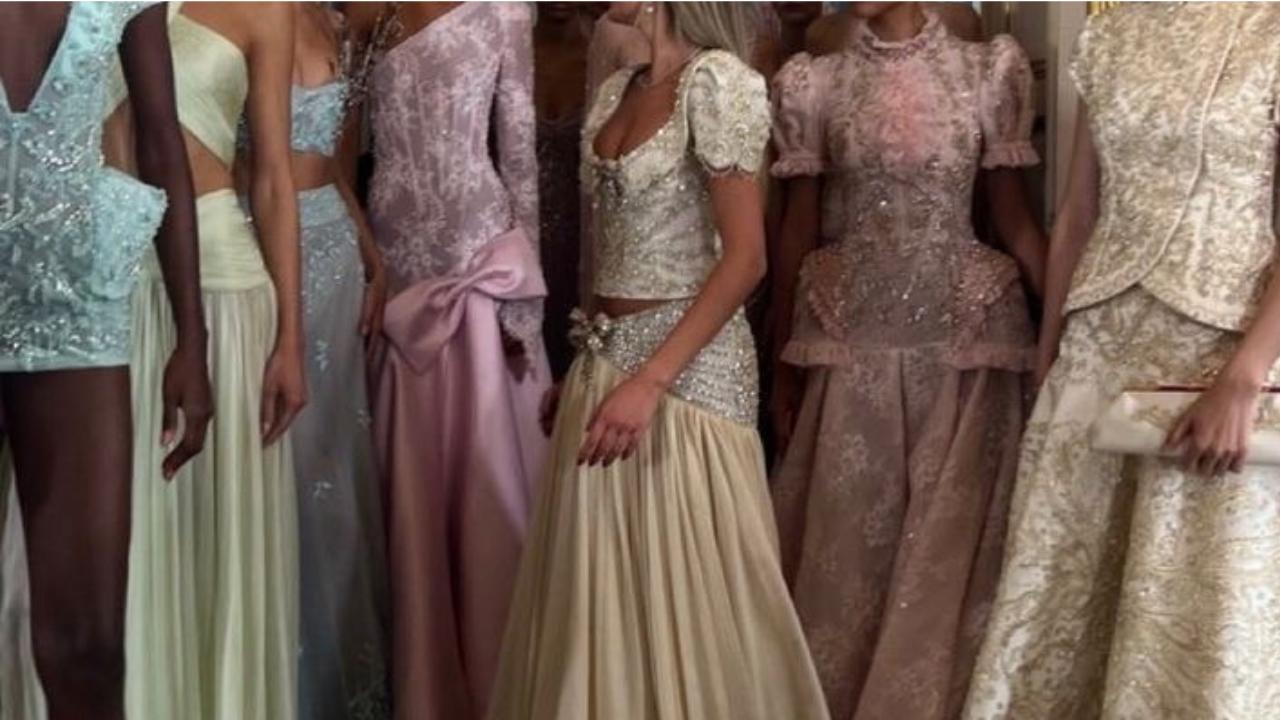
Haute couture, a term derived from French, translates literally to “high sewing” or “high dressmaking,” yet its cultural significance extends far beyond language. It represents the most rarefied tier of fashion: garments conceived as works of art, meticulously handcrafted, and tailored with extraordinary precision for individual clients. Haute couture is not merely clothing; it is an embodiment of heritage, savoir-faire, and uncompromising creativity.
The History
The origins of haute couture are inseparable from Charles Frederick Worth, the English-born designer who transformed fashion in mid-19th-century Paris. In 1858, Worth established the legendary House of Worth, widely regarded as the first true couture house. His radical vision redefined the designer’s role: rather than dressmakers executing client instructions, designers became creative authorities shaping taste and silhouette. Worth introduced innovations that remain foundational today, including presenting seasonal collections on live models and signing his garments as an artist would a painting.
Throughout the decades, couture became a canvas for some of fashion’s most influential visionaries. Designers such as Coco Chanel liberated women from restrictive silhouettes, while Christian Dior reshaped postwar fashion with the iconic “New Look,” restoring opulence and structure. Later, Yves Saint Laurent infused couture with modernity and cultural dialogue, demonstrating that haute couture could simultaneously honor tradition and challenge conventions. Today, haute couture remains the pinnacle of luxury fashion, not because of scale, but because of rarity and artistry.
The Art of Personalisation
At the heart of haute couture lies an unparalleled devotion to individuality, where each creation is meticulously shaped around the client rather than adapted to a standard form. Every detail, from the drape of the silhouette to the selection of exceptional fabrics and hand-finished embellishments, is guided by personal preference, lifestyle, and even emotion. The experience transcends conventional tailoring, becoming a collaborative journey in which vision, craftsmanship, and identity converge. While the discipline remains grounded in the storied traditions of the Paris ateliers, contemporary innovations such as virtual fittings and emerging fabrication techniques are expanding the horizons of customization, allowing precision and creativity to coexist seamlessly. In this rarefied world, garments are not simply worn; they are composed, reflecting the wearer’s narrative with a level of exclusivity and intimacy that ready-to-wear can never truly replicate.
South Asian Representation
Rooted in a design philosophy that favors functionality over fleeting trends, Lovebirds continues to distinguish itself through thoughtful construction and understated elegance. Founders Gursi Singh and Amrita Khanna have shaped the label around enduring silhouettes and everyday versatility, a sensibility that naturally aligns with the Middle Eastern market. Their recent launch on Ounass signals a strategic step forward, connecting the brand with a growing GCC audience that values refined minimalism, wearability, and timeless design.
Celebrated for blending heritage craftsmanship with modern tailoring, Tarun Tahiliani reflects on fashion’s increasingly borderless nature, where silhouettes and influences effortlessly intersect. He notes that Arab women are among the world’s most sophisticated shoppers, adding that the Middle East’s refined sensibility will continue to attract a growing wave of South Asian designers.