Nokshi Katha is a form of traditional hand-stitched embroidered quilt that has been an integral part of the rural Bengali lifestyle for centuries. Deeply rooted in the cultural history of Bangladesh and the Indian state of West Bengal, Nokshi Katha is more than just a household item—it is a folk art form, a medium of storytelling, and a symbol of female creativity passed down through generations.
The beauty and cultural richness of Nokshi Katha were brought into the literary spotlight by the famous Bengali poet Jasimuddin, through his widely celebrated narrative poem “Nakshi Kanthar Math” published in 1929. The poem tells the tragic love story of a village girl named Rupai and her beloved Saju, who embroiders her sorrow into a Nakshi Kantha after losing him. The story powerfully captured the emotional depth and cultural significance of this humble art form.This poem played a major role in introducing Nakshi Kantha to urban and educated circles, turning a rural craft into a recognize cultural symbol.
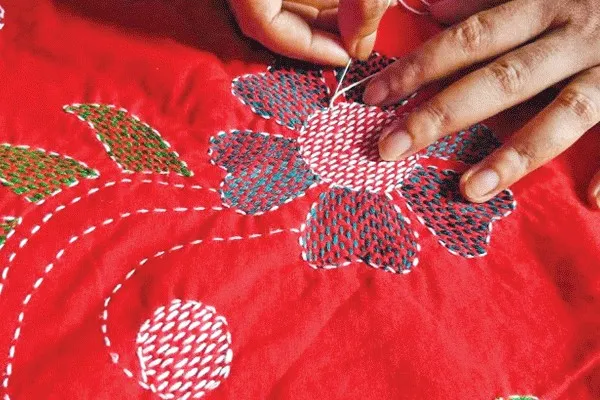
The main stitching technique used in Nokshi Katha is the running stitch, but other stitches such as chain stitch, satin stitch, and backstitch are also used in modern variations. Traditional Nokshi Katha was entirely handmade, with no patterns drawn beforehand. Instead, the designs were imagined and created freehand—a testament to the artistry of rural women. The quilts are often made by old saris, then stitching them together with intricate embroidery. The process could take weeks or even months, depending on the size and complexity of the design.
In the 20th and 21st centuries, Nokshi Katha has seen a major revival as both an art form and a commercial product. Thanks to craft organizations, women’s cooperatives, and NGOs in Bangladesh and India, many rural artisans now create Nokshi Katha for local and international markets. These modern versions are not just quilts but also appear in home decor, clothing and accessories such as handbags.
Nokshi Katha is not just a quilt—it’s a canvas of memory, a mirror of rural life, and a testament to the quiet power of women’s art. From the hands of mothers and grandmothers, it carries stories that are stitched into history itself.What began as a way to keep warm has evolved into a cultural treasure—a bridge between generations, a record of forgotten lives, and a continuing source of pride for the Bengali people.