Six and a half years ago, Monoshita was not trying to launch a lingerie label—SHAPE exists because a bra should never have to hurt to be worn. That’s the entire premise the brand was built on, and it’s the standard it has refused to compromise on since day one. What began six and a half years ago as one woman’s frustrated question, why is it this hard to find an undergarment that actually fits, has grown into Bangladesh’s answer to an industry that never once designed with South Asian bodies in mind. SHAPE isn’t just a lingerie brand. It’s a correction.
The Gap Nobody Was Filling
The frustration that launched SHAPE is one many women will recognize instantly: bra shopping is guesswork. Dress sizes are standardized enough that most people can walk into a store with reasonable confidence.
Undergarments, somehow, have gone in the opposite direction. Every brand invents its own sizing logic, and buyers are left to reverse-engineer their fit through trial, error, and discomfort. Compounding the confusion is a simple, glaring information gap: most people don’t even realize that bra sizing has two separate components, a band number and a cup letter. That’s not a small thing to not know. It’s foundational. But because conversations about undergarments carry a cultural taboo, that basic education rarely happens out loud.
Layered on top of the sizing confusion was a supply problem. The undergarments available in Bangladesh, whether from retail shelves or the open market, were almost entirely export rejects—genuinely well-made pieces, thanks to Bangladesh’s strength in the ready-made garment sector—but designed from the ground up for European body proportions. Manufacturers had little incentive to retool for a market as comparatively small as Bangladesh’s, so the gap simply sat there, unaddressed, for years. Nobody was making undergarments with South Asian women in mind. SHAPE decided to become the brand that finally would.
Designed Specifically for South Asian Bodies
This is where SHAPE draws its clearest line against the rest of the market. When SHAPE says its pieces are “made for South Asian women,” it isn’t a marketing tagline.
South Asian women carry proportions that are genuinely distinct: leaner torsos, fuller busts, and a chest-to-shoulder ratio that Western-designed products were never built to support. SHAPE didn’t adapt an existing template. It built its own from real anatomical data, collected and analyzed over years, specifically from Bangladeshi women.
That process forced SHAPE to abandon an assumption the entire industry still runs on: that most women fall into one or two standard sizes. Two women can weigh exactly the same and still need completely different support, cup shapes, and structures. SHAPE built its size range around that reality instead of designing it away, landing on a curated collection precise enough to serve real bodies while still functioning as a business. No brand serving this market has done that work at this depth.
Changing the Conversation
Perhaps SHAPE’s most quietly radical contribution isn’t fabric or fit at all. It’s language. Many Bengali women have absorbed the idea that bras are simply supposed to hurt, that discomfort is the price of the item rather than a sign it’s wrong. Nobody would accept a shoe that pinched with a shrug and a “That’s just how shoes work.” Yet undergarments have somehow been exempted from that basic standard. Just as damaging is the habit of self-blame baked into the way we talk about fit: “I don’t fit into this bra,” instead of “this bra doesn’t fit me.”
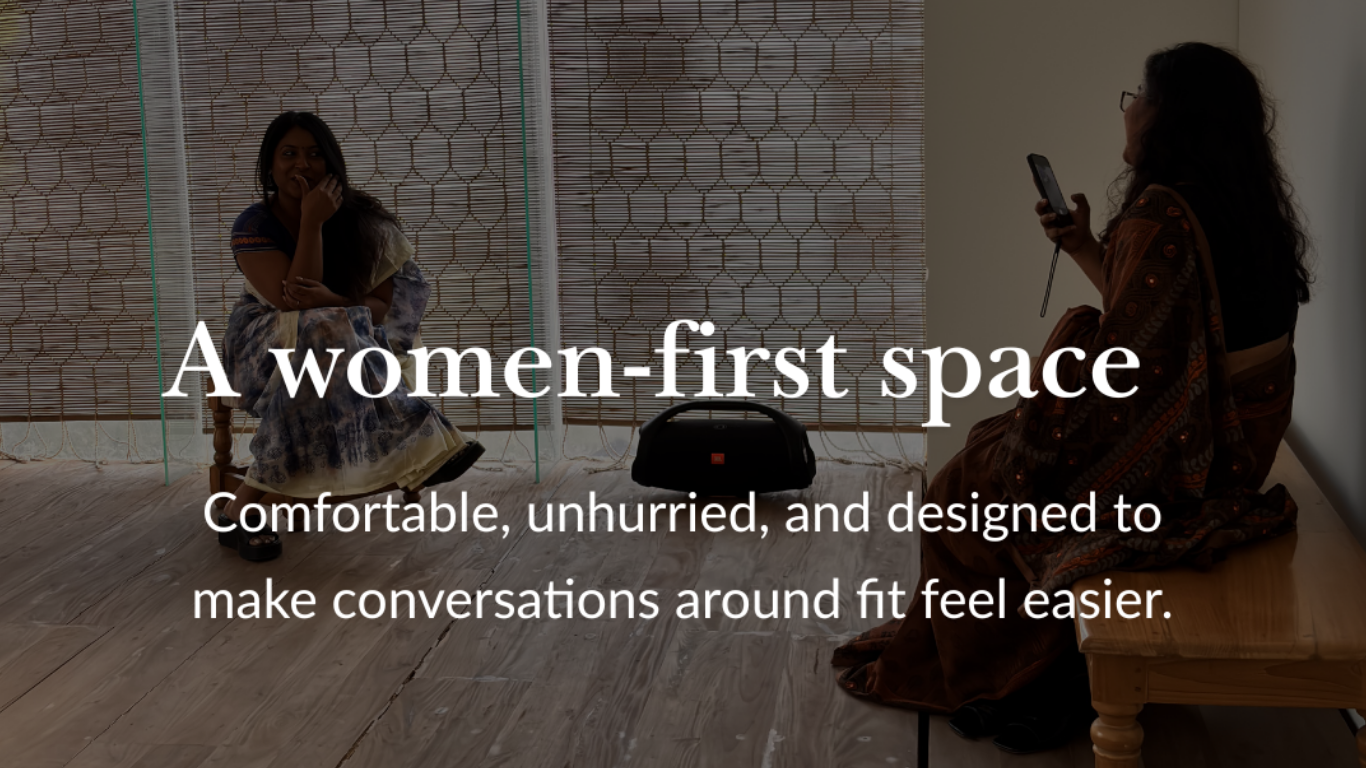
SHAPE’s staff are trained to open every consultation not with a tape measure but with a conversation, asking about lifestyle, activity levels, and daily routines before ever reaching for a size chart. It’s a small shift that does a lot of work: it turns a transaction into a dialogue and hands women back the agency the industry quietly stripped from them.
The brand’s seamless line, spanning ten or eleven styles across a wide color palette, including a coffee shade the team is especially proud of, has become the customer favorite and the natural starting point for anyone new to SHAPE.
What Comes Next for SHAPE?
SHAPE has no intention of slowing down. The brand is expanding its offline footprint, growing nationwide, and building toward a global presence rooted in the same South Asian-first design philosophy that built it in the first place. Every step forward is still driven by the same stubborn question that started it all: why should something this essential be this hard to get right?
For anyone who has ever quietly accepted an ill-fitting bra as normal, SHAPE is the brand proving that standard should have never existed in the first place.

Published by
Reject garments are available in random and limited sizing, and their distributions move at a fast pace. Therefore we do not maintain inventory. However, if you like a piece we will check if your size if available and hold it for you. Please fill out the form to send us your query.