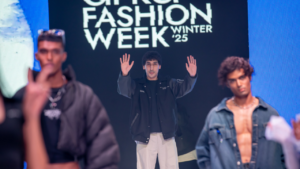
Ask Nafi Haque what he does for a living and he will tell you, with a completely straight face, that he is a glorified tailor. Every designer is, he insists, just a tailor who has managed to accumulate a bit of clout along the way. It is a modest thing to say about a man building one of the most quietly ambitious luxury labels to come out of South Asia.
Born in America and raised in Bangladesh, Nafi Haque is shaped by a father who ran a textile production business and a mother who is an artist. Nafi is the product of fabric and imagination colliding at the dinner table. When he eventually moved back to the States, the only thing that made his new apartment feel like home was a nokshi katha, the traditional hand-stitched quilt made in Bangladesh. He realized quickly that he was not the only transplant clinging to a piece of cloth for comfort, and Nokshi was born out of that ache. It is less a label and more a long-distance phone call between his two identities.
Hands That Built a Movement
Nokshi operates around a kuti in Jessore, essentially a gathering ground where artisans practice their craft together. Haque is present regularly, overseeing production directly. Most of these artisans were previously identified only as homemakers, a designation that obscures their labor and economic contributions. Haque pays them competitive wages, facilitates banking access, and provides healthcare. Nafi personally took the women to the bank to open their own bank account where they would only have access to the money. His rationale is direct: if European designers can earn substantial incomes from brands built on historical advantage, Bengali artisans performing equivalent work deserve comparable compensation.
Every material in a Nokshi piece, down to the thread and the buttons, is Bangladeshi-made, with zippers being the one holdout he is still hunting for. The fabric is entirely hand-loomed, a nod to the era before colonization when Bengal produced some of the finest textiles the world had ever touched. He is not simply preserving that legacy; he is actively teaching it new tricks. His artisans have spent lifetimes perfecting the katha stitch, but nobody handed them a double-layered trench coat until Nafi did, coaching them through it over hours-long video calls like a very patient, very stubborn art teacher.
Creative Process
Nokshi is heavily inspired by nature and its exceptional beauty. The designer travels obsessively, and nature has a habit of sneaking into his sketches uninvited. His pattern-making process is almost theatrical: no mannequins allowed. He drapes and cuts fabric directly onto a human body because he wants to understand how cloth behaves on something that actually moves and breathes, not on a stiff foam torso pretending to be human.This methodical approach required his team to advocate for years before he adopted digital design tools. He still produces original prototypes himself and is currently learning the nokshi katha technique, maintaining his principle that designers should understand their medium fully.
JATRA
Every Nokshi collection tells a story, and JATRA, meaning “journey,” is where the tale begins. The Jatra jacket, the signature piece, originated from observation during a Lake Tahoe trip: a particularly detailed snowflake on dark fabric. This silhouette has become permanent across collections, reimagined seasonally while other styles rotate entirely.
AYNA
If JATRA is the outward journey, AYNA is the inward one, a collection built entirely around self-reflection. The collection’s thorn motifs emerged from a forest photoshoot incident where the photographer’s arm got stuck in thorns. This incident left a visually compelling imprint on the designer’s mind.
The label is not chasing trends or mass appeal. It is chasing fairness, memory, and a snowflake that fell on the right jacket at exactly the right moment.
The Calm Before the Storm
Nafi Haque does not leak his secrets the way most designers do, through a strategically placed Instagram teaser or a friendly word to the press. He guards them the way his artisans guard a nokshi katha mid-stitch, protective of something unfinished but already sacred. Nokshi went quiet for a season recently, no explanation offered, and by now you should know that quiet is never really quiet where this label is concerned. It is the pause before a needle pierces cloth, the breath held right before a story gets told.
Everything Nafi has built so far; the hand-loomed textiles, the kuti in Jessore, and the women he personally walked into banks to open their first accounts, has always carried a quiet defiance underneath the beauty.
He has spent seasons proving that Bengali craftsmanship deserves the same reverence as anything stitched in Milan or Paris, that a jamdani weaver’s hands are just as worthy of a living wage as a European atelier. But something is shifting.
The word is that the next collection will stop asking politely and start saying the thing outright, wearing its politics as visibly as its embroidery, using centuries-old technique not just to honor the past but to confront it. If Nokshi has spent its life so far translating grief and memory into wearable art, this next chapter may be the one where it stops translating and simply speaks. Keep watching Jessore. Keep watching the hands that have already rebuilt so much. Something is coming, and it will not be quiet.

Published by
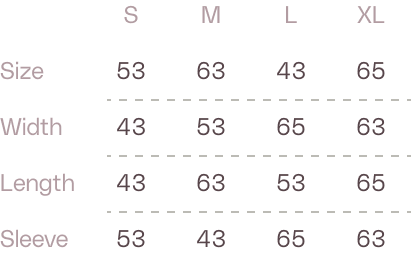
Reject garments are available in random and limited sizing, and their distributions move at a fast pace. Therefore we do not maintain inventory. However, if you like a piece we will check if your size if available and hold it for you. Please fill out the form to send us your query.